
Curling is Life 🥌

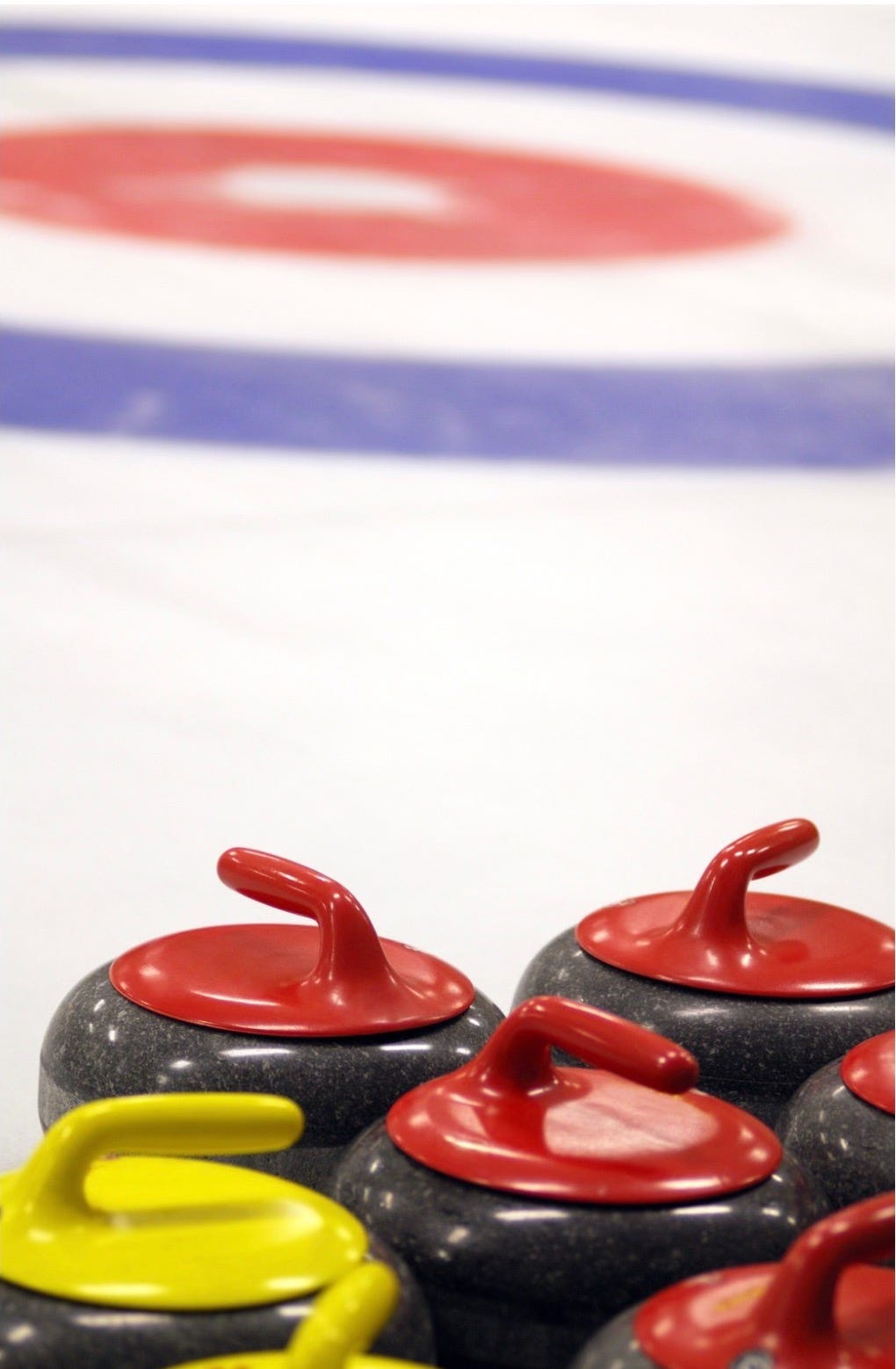
Curling has been an official Olympic sport since 1998, but it’s new to me as of last weekend.
The 2026 Milano Winter Olympics are nearing the end. While flipping TV channels between various skiing events last Saturday, my son landed on a women’s curling game between the United States and Japan. One by one, the other members of my family made their way to the couch and over the next two days, we all became hooked.
None of us knew anything about the sport. It looked like giant shuffleboard on ice with mini Swifters and a lot of screaming. We tried to figure out how to play from context and the announcers’ commentary, but ultimately had to resort to Google because curling is way more complicated than it looks.
Curling incorporates elements of a lot of different sports. Shuffleboard, yes, but also chess and bowling and golf and baseball and darts and billiards. Honestly, the more I watched, the more connections and overlap I could see. Curling requires sophisticated strategy but also insane flexibility and brute strength. The player who throws the stone basically does the splits on ice, in pants. And the sweepers sweep with such intensity, I don’t think I’ll ever casually clean my hardwood floors again.
We sought out all the Olympic curling we could find over the weekend, including other countries’ teams, even found ourselves ensconced in Team Canada’s “double-touching” controversy.
We also jumped up off our couch with loud cheers at the USA women’s team late-round win over China. They came from behind with a steal and we all raised our brooms in triumph.
Curling, you’ve made a fan out of me.
I’m fascinated with the sport, and, of course, fascinated with any symbolic or metaphorical significance it might provide.
Every move in curling is considered and deliberate. A team wins according to how many stones end up closest to the very center of the house. Imagine a large dartboard and the center circle is called the button. It’s the place every stone is either trying to reach or protect.
Two teams alternate turns pushing a stone down the sheet of ice. Eight stones, per team, per round (called ends in curling). To win the game, the teams must develop strategies as they go, deciding what kind of shots they want to take.
The draw shot aims for the house, specifically the button. The guard shot lands short of the house, in front of it, to protect previously played stones. The takeout shot removes an opponent’s stone when it hits it and knocks it out of the house. Strategies abound, including those that are offensive and aggressive and sometimes sacrificial, while others are conservative and defensive and sometimes watchful.
Every stone represents a choice.
It’s a lot like life.
Life also has a button. We all have our own targets.
What really matters? Where is your center?
My center is my faith. When my choices align with my faith, the things and people I care about most, like my family, friends, and health, become my priorities. I'm not sure all my throws land there, but they certainly should.
The turn begins when the stone is pushed and released and slides down the sheet toward the house.
But once the stone is released, there is still work to do.
Curling stones do not move in a straight line. They are controlled by external influences, particularly the sweeping of brooms all around the stone as it moves down the ice. The sweeping causes friction and helps curl (or turn) the stones in one direction or another. Teammates play a crucial role here because they impact the stones—where they land and what they do.
The stone always curves. You can’t push a stone and expect it to follow a straight line. This is important because once a stone is released, it’s not set. Just like in life, when our choices are rarely direct routes to anywhere. Changes are still available and possible. Teammates can help guide, clear, turn, or protect your stones. And you can help guide, clear, turn, or protect others’ stones.
We don’t play, or live for that matter, in a vacuum. We are in community with other people, and these people can help or hurt our choices. Sometimes there are people who nudge us toward our center. There are also those who sweep against us and derail our stones. Sometimes it’s obvious who these people are and what they are doing. Sometimes it isn’t. Our game strategies must account for both kinds of brooms. Our lives are no different.
Lastly, curling does not allow unlimited throws. Each team gets eight stones per end and then the ice is cleared and a new end begins. In the last end, once the final stone is thrown, the game is over, and the score is determined based on which stones are closest to the center. The closest stones accrue the points, and the team with the most points wins.
We don’t have unlimited choices in life, either. Though we often forget that. We live as if there’s always going to be another stone, another chance, another opportunity to make an another, better throw. But ends ends. Games have final scores. Even the Olympics have closing ceremonies.
We are each given a certain number of stones to throw, so it’s important to be wise and thoughtful about what we do with each one. We can’t waste them.
Every single stone is not going to make its way to the button. Some choices are made for others, maybe even players who come after us. Other choices are sacrifices for the greater game in curling, the greater good in life. These choices knock out what might stand in the way of reaching our center. Other choices are made simply to protect another stone, or another person.
And the people on the ice with us, well, they make all the difference. Choosing your teammates is just as important as choosing your shots. They huddle and brainstorm with us. They also yell and cheer for us.
Curling is life. Sweep well.
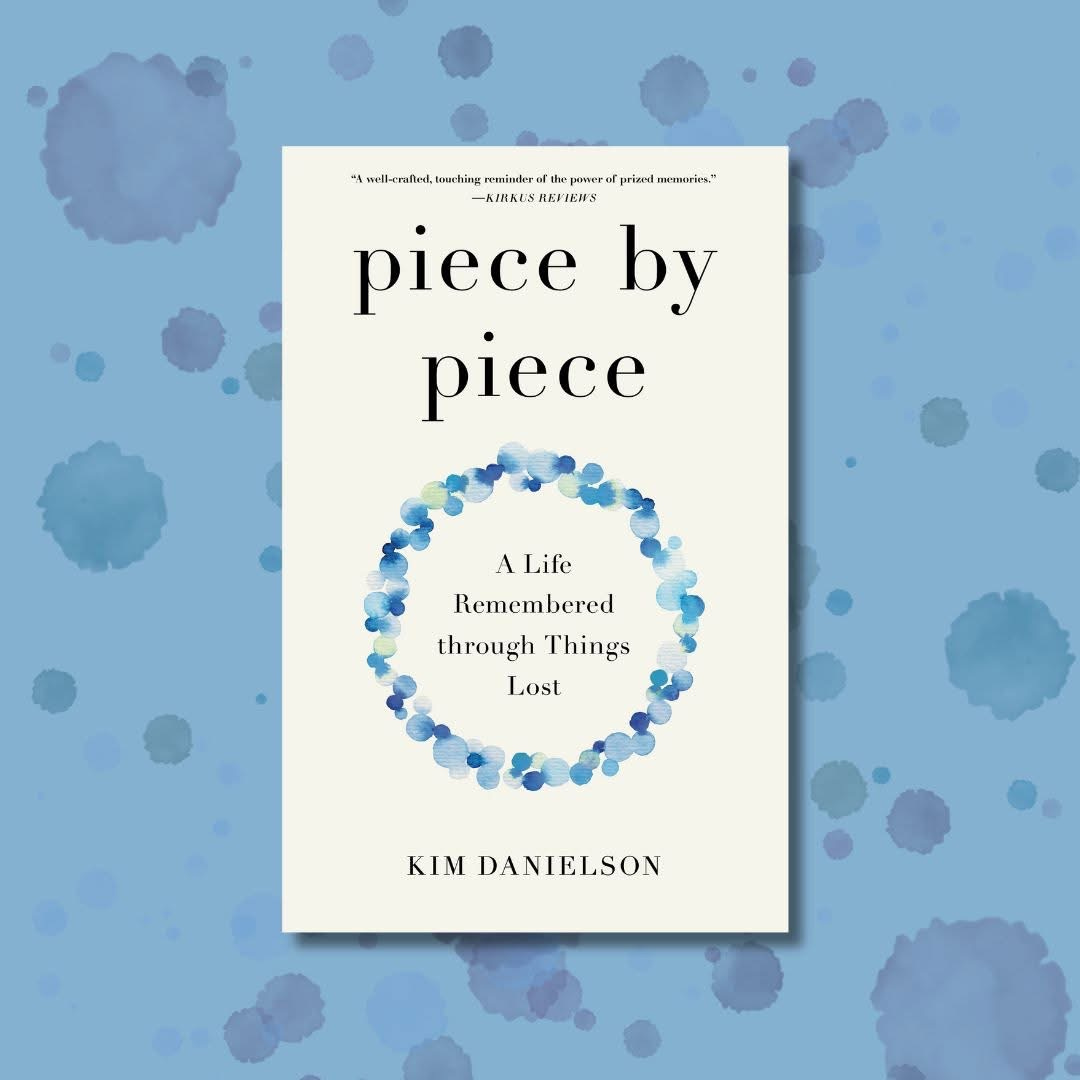
Speaking of objects that carry meaning — my book Piece by Piece: A Life Remembered through Things Lost explores exactly that. One of my better stones. Available here.
Your book is a must read, and a page turner that kept me reading well into the night. I had to see how the next chapter started, and then of course could not stop. What amazing life's lesson you gave me! My absolute favorite was chapter 29. Crosby is my hero 🤍
Who knew there were so many spiritual applications in curling? Thanks for pulling back the layers to help me see this and not waste a single stone 🌟